Project 5 of 10
Momentum
A private accountability clubhouse for a five-man crew — check-ins, public commitments, and consistency stats.
Ever tell your friends you’ll finally start something — then quietly let it slide? What if the whole group could see what you committed to, and whether you actually followed through?
See it work
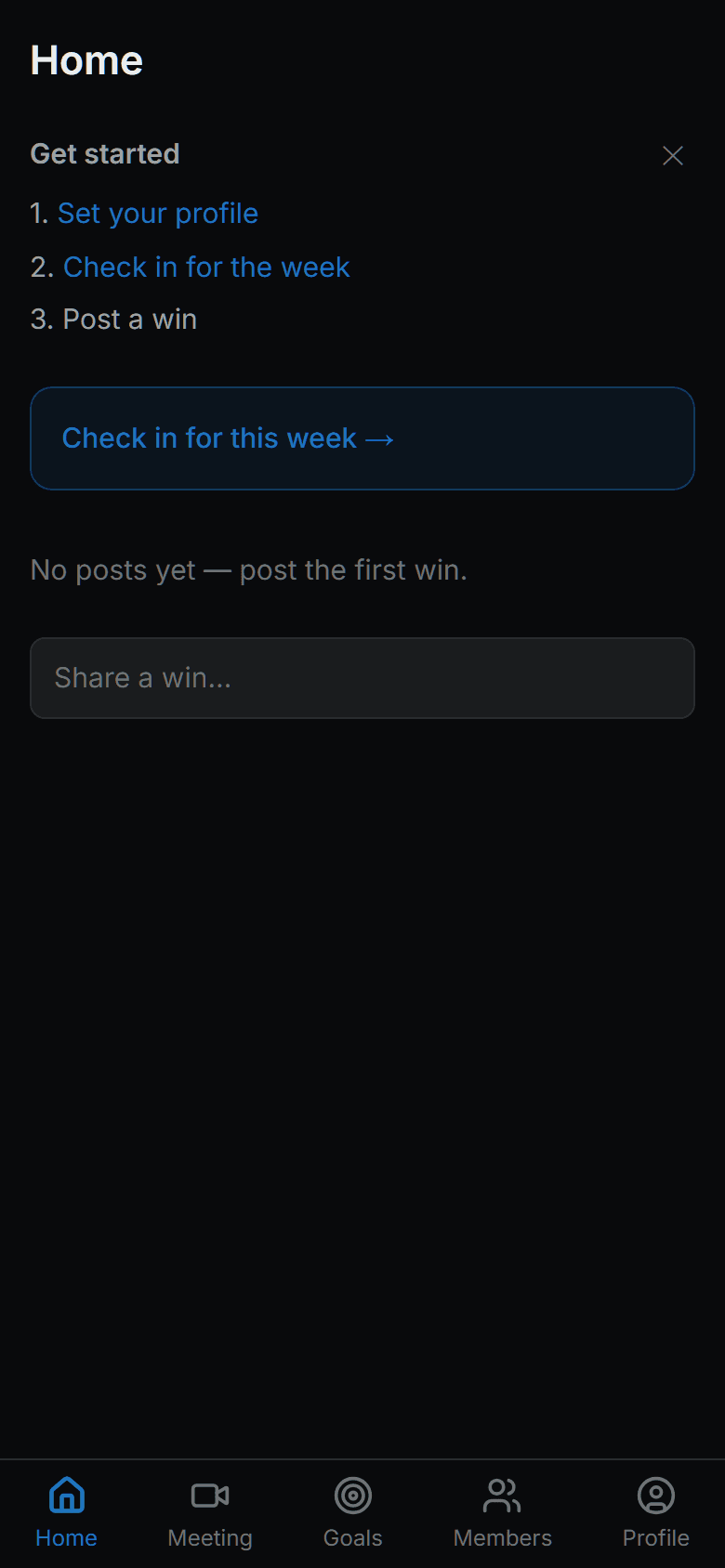
A private clubhouse for your crew.
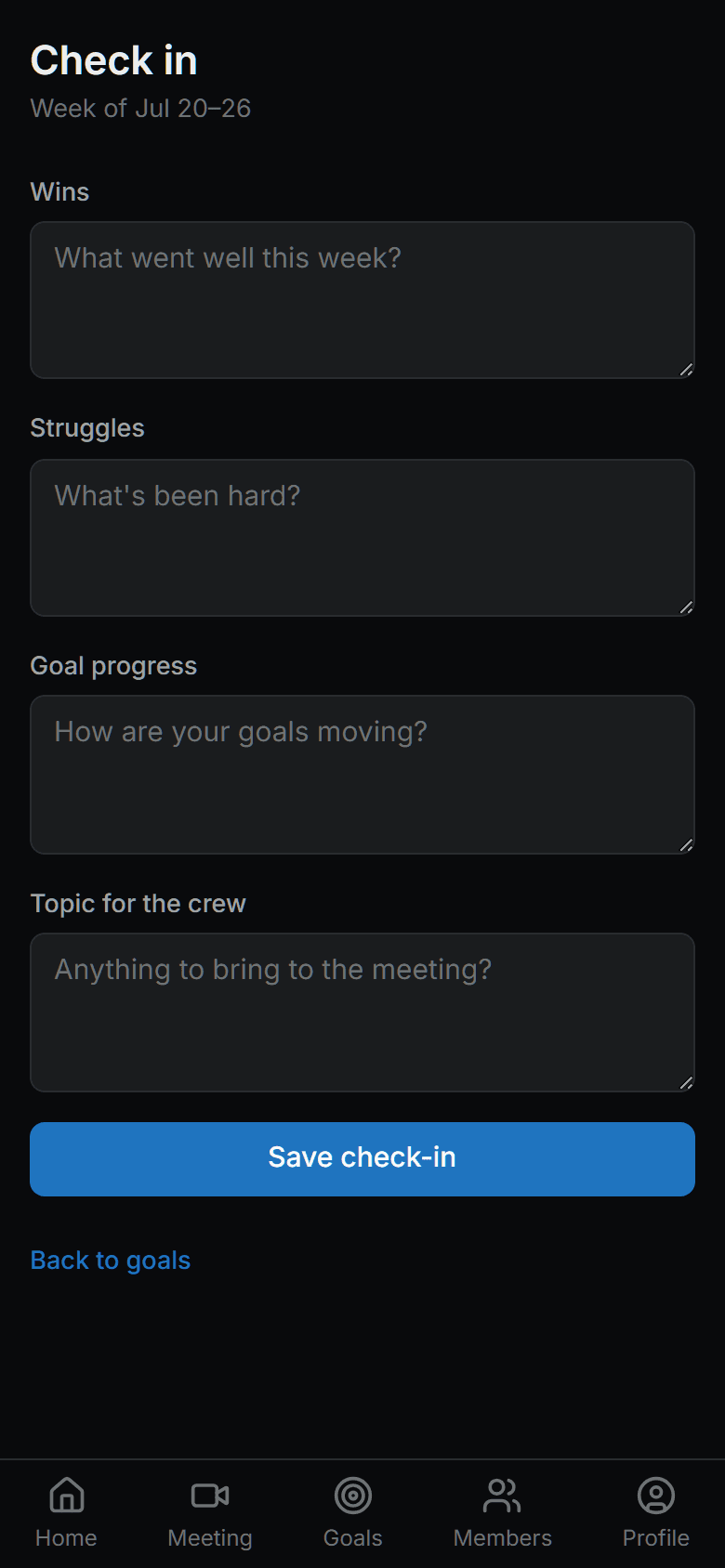
One check-in writes the meeting for you.
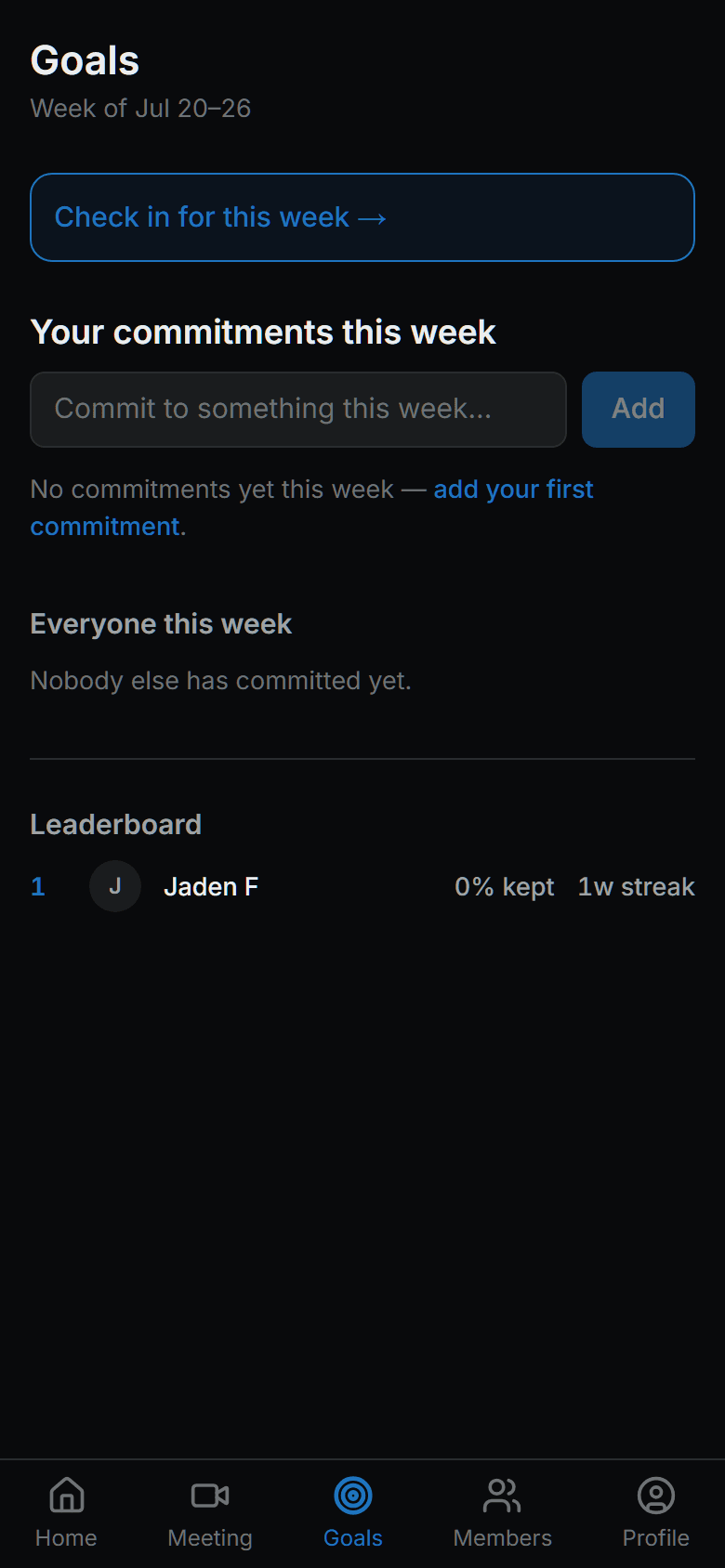
Say it out loud, and it’s tracked.
The goal
Five of us met at a youth success program and hold each other accountable every week. Momentum is our private clubhouse: a feed for wins, weekly check-ins that compile themselves into the meeting agenda, commitments made in front of the group, and long-term goals with consistency stats.
The success metric is social, not technical: all five check in weekly, the Zoom call runs straight off the compiled agenda, and kept-commitment rates stay visible enough to create real peer pressure. It's the one place where what you said you'd do meets what you actually did — in front of the four people whose opinion you care about.
Background
Momentum is designed night-first — it gets opened on phones in dark rooms, after the gym or before bed — so light never blasts and a single warm terracotta accent carries all the emphasis. The brand personality is a calm operator: no confetti, no gamification theater, status rendered as precise data.
It's deliberately a tool with a feed, not a feed app. Density and copy are tuned for five people who know each other, with zero onboarding theater. Phase 1 shipped to production in July 2026, and the crew is onboarding onto it now as an installed PWA.
Built with AI
Before any code, I worked with AI to pin down the product's identity — the users, the brand personality, the anti-references (no purple-gradient AI-template look, no social-media cosplay) — and wrote it into a product doc that every later decision got checked against.
Then I directed the implementation the same spec-first way: design brainstorm, written plan, Claude executing under review. It shares Supabase infrastructure with Life Platform through its own isolated schema — one decision that kept a five-person app free to run.